The test
Walk, don't stand. The cutoff below was measured with a slow walking cool-down. Standing or lying still, heart rate drops faster, and the published cutoff in that setting is higher (18 bpm).
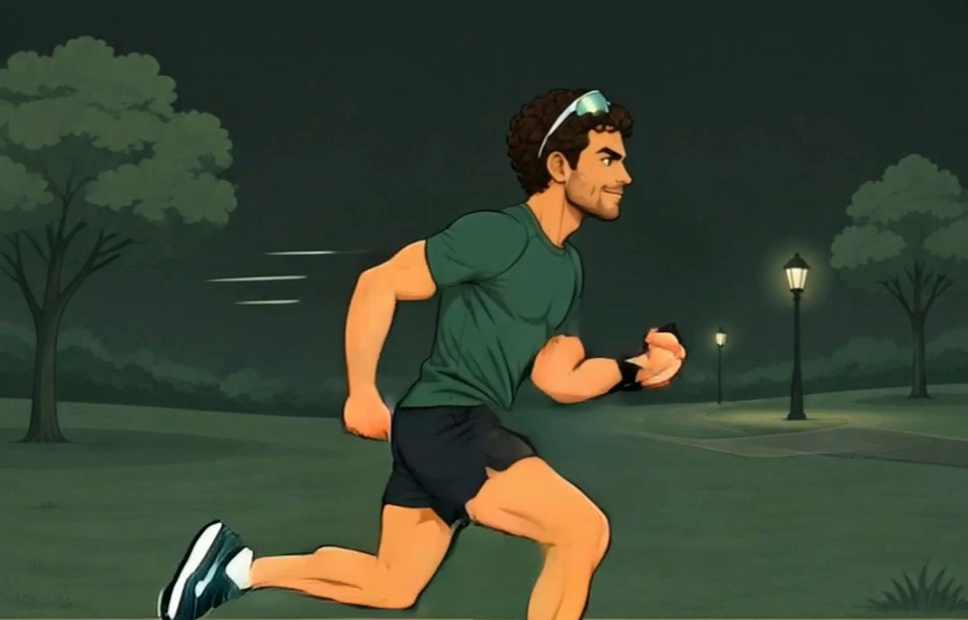
- Warm up for about 10 minutes, easy.
- Go hard for 3 minutes, as fast as you can hold.
- Note your heart rate at the end of the hard part.
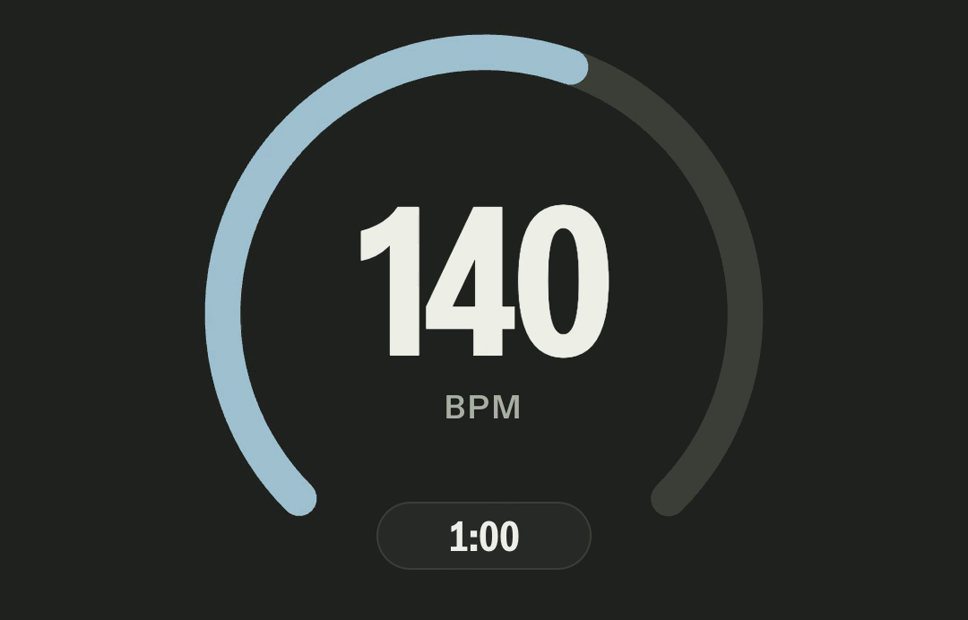
- Walk slowly for 1 minute, then note it again.
- Subtract: the first number minus the second is your 1-minute recovery.
Reading the number
Example: 170 at the end of the hard part and 140 a minute later is a 30-beat drop. Higher is better: a faster drop means your nervous system is braking your heart quickly.
We don't draw bands like 'good' or 'excellent' between 13 and 30. We couldn't find a study behind them, and the only line with solid evidence is the one below.
The 12 bpm line
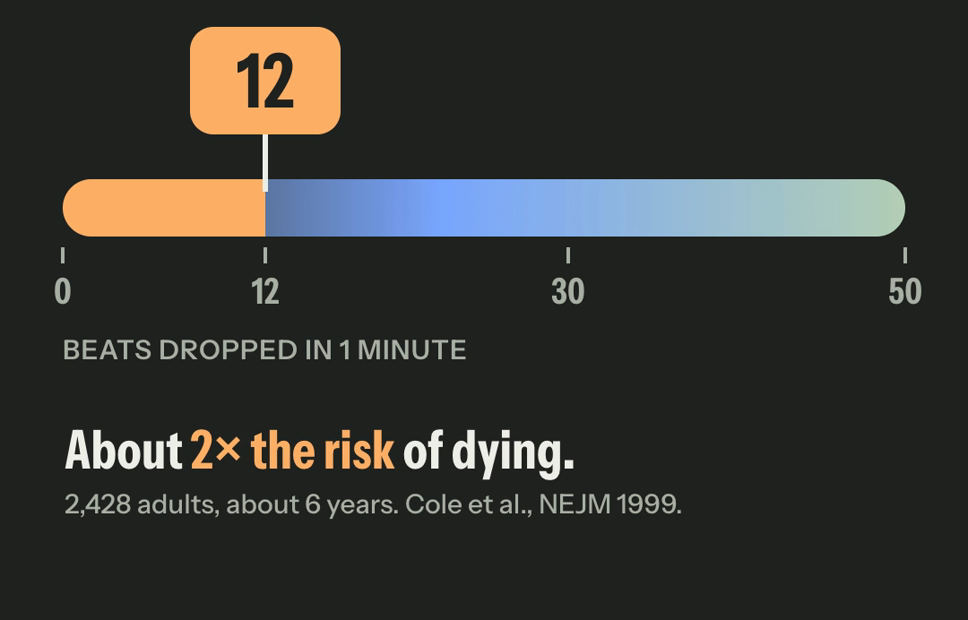
In Cole et al. (1999), 2,428 adults referred for a treadmill test were followed for about 6 years. Those whose heart rate dropped 12 beats or less in the first minute, with a walking cool-down, had about twice the risk of death after adjusting for other risk factors.
They were patients sent for testing, not runners, and this is an association, not a diagnosis. A low number on a bad day, after poor sleep or in heat, says little. A number that stays low is worth showing a doctor.
For any watch: read your number and get a plan
Paste this into Claude or ChatGPT with your two numbers. It works with any watch or chest strap, or even counting your pulse. The plan should match how much you train now; in trials of heart patients, aerobic training improved recovery.
My heart rate was [A] at the end of 3 hard minutes and [B] after 1 minute of slow walking. Give me my 1-minute recovery and compare it with the 12 bpm cutoff from Cole et al. 1999 (walking cool-down), without diagnosing anything. Then build a 6-week plan, 2 to 3 sessions a week mixing easy and hard, sized to how I train now, with a retest at the end.On Apple Watch: let telo read it
Apple Watch records Cardio Recovery after many workouts, in the Health app under Heart. With telo connected, this prompt reads the last 90 days and creates the test as a planned workout. The first time, open telo on iPhone, go to Planned workouts and tap Schedule on Watch.
Using telo, show my heart_rate_recovery for the last 90 days (median, days at 12 bpm or less, trend), then put the test on my Watch with create_workout_plan.What the test showed
On one account, 45 of the last 90 days had a reading, the median was about 46 bpm, no day was at 12 or below, and the average rose about 2 bpm from August to November. telo accepted the test as a pending plan, and we cancelled it right after.
Apple's daily values change by less than 1 bpm from one day to the next, which looks smoothed rather than one raw drop per workout. telo also can't tell how each workout ended, and the ending changes the number.
Where the data stops
Heart rate recovery depends on how hard you went, how you stopped, heat, caffeine, sleep and medication. Compare yourself with yourself, under similar conditions.
This is not medical advice. If you have a heart condition, chest pain, dizziness or unusual breathlessness, talk to a doctor before hard efforts.
Practical questions
Can I do the test standing still instead of walking?
You can, but then the 12 bpm cutoff doesn't apply. Standing or lying down, heart rate drops faster, and the published cutoff in that setting is 18 bpm. To compare with the study, walk slowly during the recovery minute.
My recovery was 12 or less. Am I sick?
There's no way to tell. The study shows an association in patients referred for testing, not a diagnosis. A low number on a bad day says little; if it stays low when you repeat it, show it to a doctor.
Does the prompt create anything in my account?
The any-watch prompt doesn't use telo. The Apple Watch one reads 90 days of Cardio Recovery and creates the test as a planned workout in telo, which you schedule on your Watch and can cancel.
Sources and availability
Plans, regions and interfaces can change. Check the official sources before setting up.
- Cole et al., 1999 · Heart-rate recovery immediately after exercise as a predictor of mortality · NEJM
- Watanabe et al., 2001 · Heart rate recovery immediately after treadmill exercise, no cool-down · Circulation
- Snoek et al., 2013 · Effect of aerobic training on heart rate recovery · PLoS ONE
- telo · Reel ep09 · 2026-11-09
How this guide was prepared
The telo prompt was tested on 9 November 2026 against one account, with the owner's permission: it read 90 days of daily Cardio Recovery and created one test workout with create_workout_plan, cancelled right after. The 12 bpm cutoff was checked against Cole et al. 1999 and its walking cool-down; the standing or lying cutoff (18 bpm) comes from Watanabe et al. 2001. Frames come from Reel ep09. Prepared with AI assistance.