What the study found
Stamatakis and colleagues (2022, Nature Medicine) used UK Biobank data: 25,241 adults with a mean age of 62 who reported no leisure exercise, wearing a wrist accelerometer for a week, then followed for 6.9 years on average, with 852 deaths.
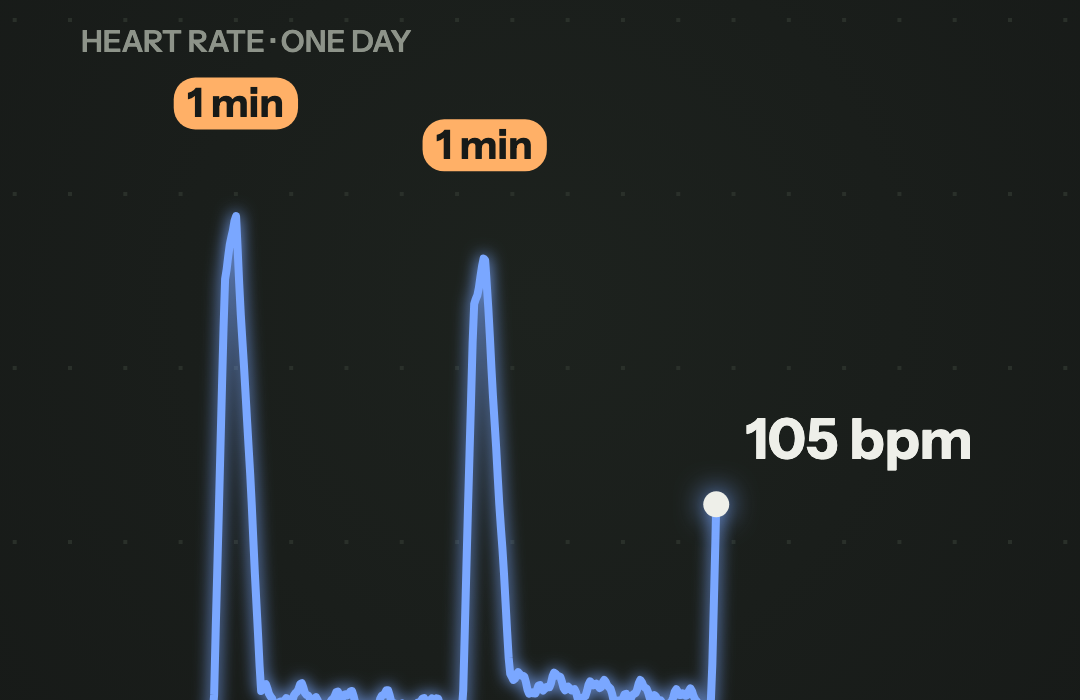
The sensor picked up vigorous bursts of up to 1 or 2 minutes in daily life. Compared with people who had none, a median of 3 bursts a day went with 38 to 40% lower risk of death from any cause and from cancer. A median of 4.4 minutes a day of these bursts went with 26 to 30% lower risk.
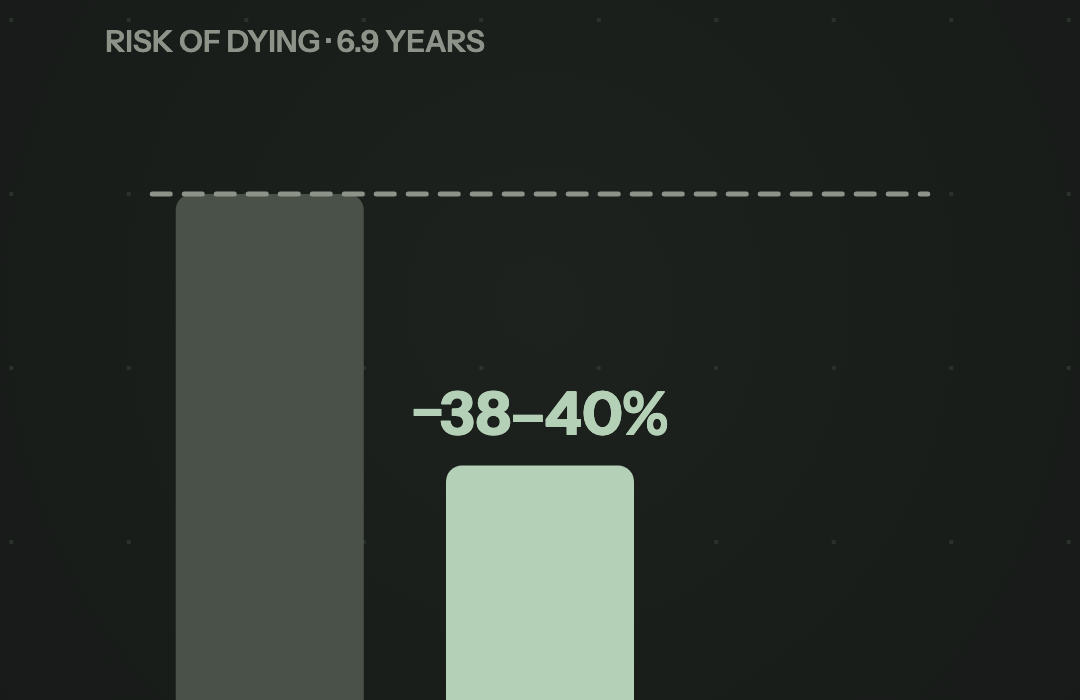
What counts as a burst
Hard means too out of breath to talk comfortably. A stroll does not count. The examples in the paper are everyday: climbing stairs fast, walking very fast on the way somewhere, rushing for the bus, a fast walk uphill.
The study measured intensity with the sensor, not with a talk test, so the breath rule is a plain translation, not their method. Three of these a day add up to a few minutes, which is the point: no gym, no kit, no time slot.
For any watch: find the days with no exercise
Paste this into Claude or ChatGPT with your watch data. The zero days matter more than the average: a good week can hide two empty days, and the weekdays they fall on usually point to the routine that leaves no room.
Look at my daily exercise minutes for the last 8 weeks. Show them week by week, count the days with zero exercise minutes, and list which weekdays they fall on. If there are no zero days, list my 5 lowest days instead. Then suggest where 3 short hard bursts (1 to 2 minutes, out of breath) could fit into those days, like stairs or a fast uphill walk. This is about habits, not a diagnosis.On Apple Watch: let telo read it
With telo connected, the AI reads the daily Exercise minutes from Apple Health, the green ring on the watch, without you exporting anything.
Using telo, show my exercise minutes per day for the last 8 weeks, count the days at zero and which weekdays they are (or my 5 lowest days if none are at zero), and suggest where 3 short hard bursts could fit.What the test showed
On one account, telo returned 56 days of exercise minutes in a single answer. None of them was at zero, which is why the prompt now falls back to the lowest days: without that, an active person gets an empty list.
The five lowest days were a Saturday with 9 minutes, a Monday with 40, then a Tuesday, a Sunday and a Thursday around 80. The two weekend dips were the ones worth a look; the rest of the weeks already sat well above any burst target.
Where the data stops
The study is observational: people who move in short hard bursts may differ in other ways, so it shows a link, not that the bursts caused the lower risk. Activity was measured for one week, in older British adults, and only 5.5% of those invited took part.
Apple Watch Exercise minutes count brisk activity, not only vigorous bursts, so a day above zero does not mean it had three hard bursts in it, and a single 1 minute burst may barely register. Read the zero and near zero days as the signal. This is not medical advice; if you have a heart condition or have not been active, ask your doctor before adding hard efforts.
Practical questions
Do the bursts have to be exactly one minute?
No. The study counted vigorous bursts of up to 1 or 2 minutes. What matters is that they are hard enough to leave you out of breath, and that they happen a few times a day.
Is a long walk just as good?
This study was about short vigorous bursts in people who did no exercise, so it does not compare them with long walks. Walking has its own benefits; the finding here is that even a few hard minutes in an ordinary day go with lower risk.
Will my watch count a 1 minute burst?
Apple Watch credits Exercise minutes for activity at or above a brisk walk, minute by minute, so a hard minute usually shows up. It is not labeled as a burst, though, which is why the prompts look for empty days rather than counting bursts.
Sources and availability
Plans, regions and interfaces can change. Check the official sources before setting up.
How this guide was prepared
The Apple Watch prompt was tested on 12 November 2026 against one account, with the owner's permission, using only telo's read tools: daily exercise minutes for 8 weeks. The numbers come from Stamatakis et al. 2022; the images are frames from Reel ep23. Prepared with AI assistance.