What the study found
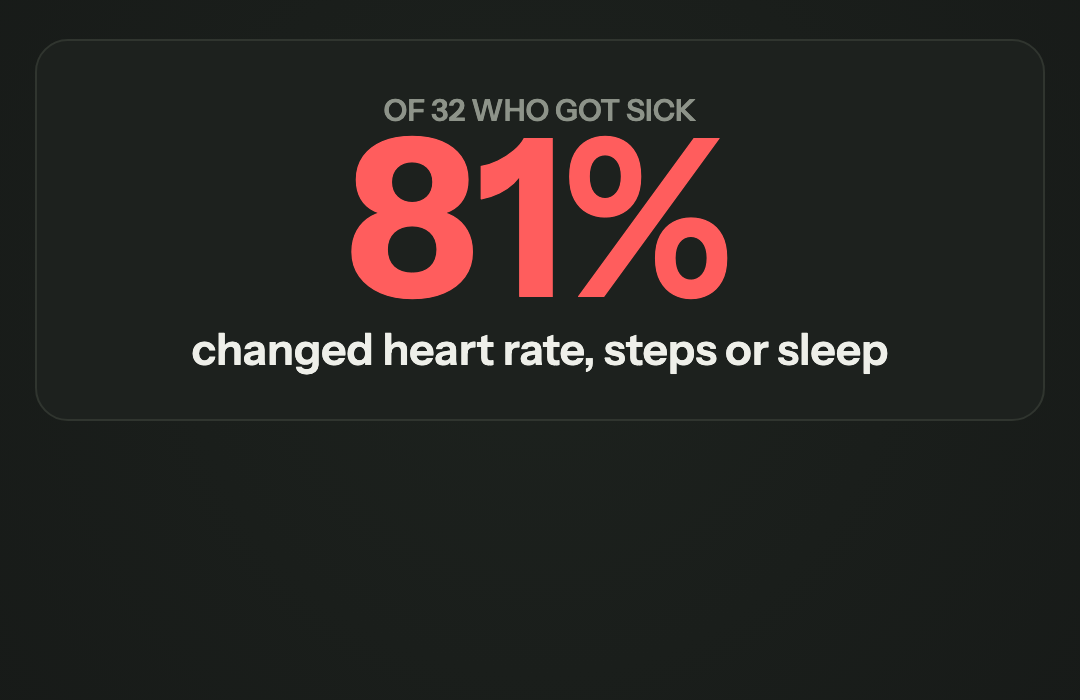
Mishra and colleagues (2020, Nature Biomedical Engineering) followed about 5,300 people who wore smartwatches. 32 of them got COVID-19 and had watch data around the infection. 26 of those 32 (81%) showed a change in heart rate, daily steps or time asleep.
Then the team ran an alarm over data already collected: it fired when resting heart rate rose well above that person's own baseline. Looking back, it would have flagged 63% of the cases before symptoms started.
Why your own baseline matters
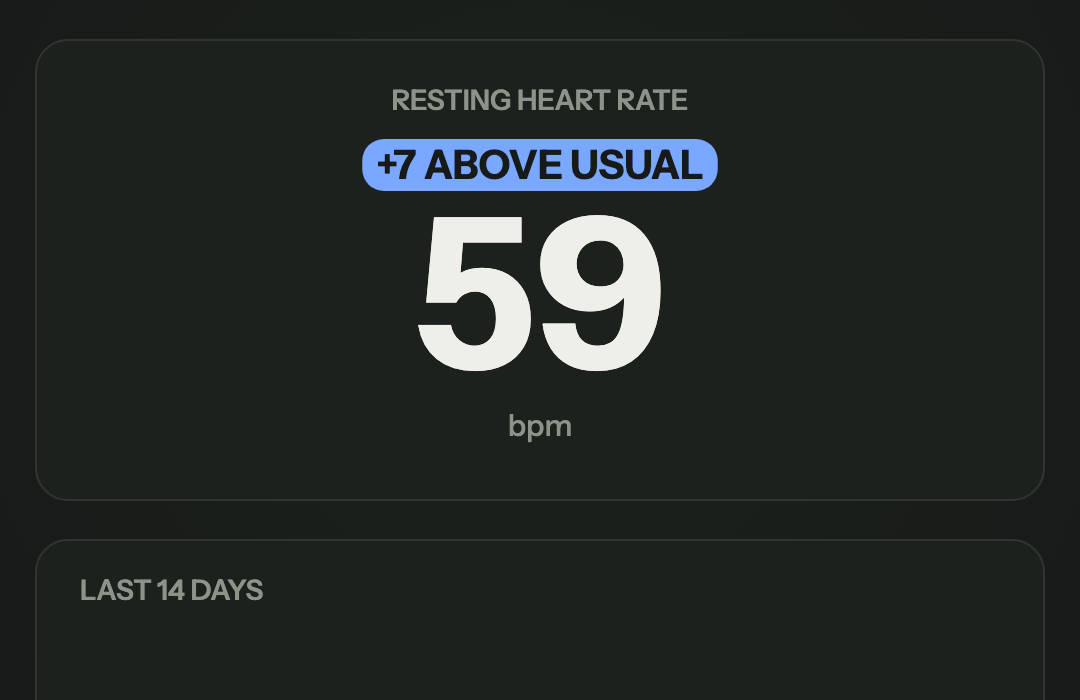
Resting heart rate varies a lot between people: 48 bpm can be normal for one person and unusual for another. What the study used was each person against their own usual range. A jump of a few beats above your normal, for a few days in a row, says more than any single number.
That is also why one high day means little. Alcohol, a hard workout, a bad night, heat or stress push resting heart rate up too. It is a signal that something changed, not a diagnosis.
For any watch: your number against your usual
Paste this into Claude or ChatGPT with your watch data. Eight weeks gives the model enough days to know your normal spread, so a single noisy reading doesn't look like a change.
Look at my resting heart rate for the last 8 weeks. Work out my usual range from the first 6 weeks (average and normal spread). Then list the days in the last 2 weeks that sat above that range, and for each one tell me what else was different that day or the night before: sleep, a hard workout, steps. Don't diagnose anything; just show what moved.On Apple Watch: let telo read it
With telo connected, the AI reads your resting heart rate, your personal baseline (the 30 to 60 days before each date), your sleep and your training load straight from Apple Health. Run it again any morning your number looks off.
Using telo, show my resting heart rate for the last 8 weeks against my personal baseline, list the days above my usual range, and what my sleep and training looked like the day before each one. Don't diagnose; just show what moved.What the test showed
On one account, telo returned 8 full weeks of resting heart rate and a 60-day baseline for each day: about 49.5 bpm, with a normal spread of about 1.7 bpm. In the last 2 weeks, two days sat above that range: 52 bpm and 53 bpm, the second about 2 spreads above usual. Training load on those days was ordinary.
The nights before those two days had no sleep stored, so the sleep part of the answer was empty for exactly the days that mattered. The prompt says so instead of guessing, which is what you want. Weekly averages on that account moved only between 48.5 and 51.8 bpm.
Where the data stops
The study was small (32 infected people) and retrospective: the alarm was simulated on data already collected, not tested live. It did not measure how often the alarm would fire in healthy people, so false alarms in real use are unknown. It measured COVID-19; other illnesses were not part of it.
If you feel unwell, trust that over the watch, and if you are worried, talk to a doctor. A normal resting heart rate does not mean you are fine either. This is not medical advice.
Practical questions
How many beats above usual is a real change?
There is no single cutoff. Look at how far you are from your own normal spread and for how many days in a row. One day a few beats up is common; several days well above your range is worth noticing.
Does Apple Watch already do this?
The Vitals app on Apple Watch compares overnight readings such as heart rate and breathing against your usual range and flags outliers. The prompt here lets you see the numbers behind it and what else changed.
What else raises resting heart rate?
Alcohol, a hard workout, short or broken sleep, heat, dehydration, stress and some medicines. That is why the prompt asks what else was different the day before.
Sources and availability
Plans, regions and interfaces can change. Check the official sources before setting up.
How this guide was prepared
The Apple Watch prompt was tested on 11 November 2026 against one account, with the owner's permission, using only telo's read tools: resting heart rate per day and week for 8 weeks, the personal baseline from derived_metrics, sleep nights and training load. The numbers come from Mishra et al. 2020; the images are frames from Reel ep19, with example data. Prepared with AI assistance.