What happened
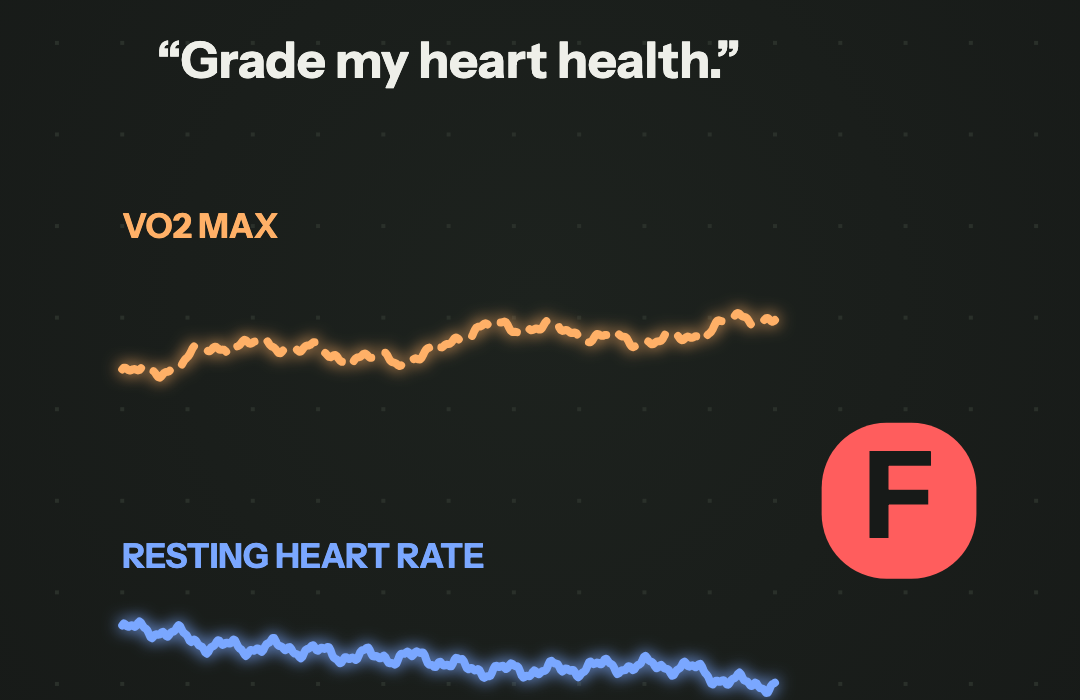
In January 2026, Washington Post columnist Geoffrey Fowler connected 10 years of Apple Watch data to ChatGPT Health and asked it to grade his heart health. As reported by MacRumors, it gave him an F. Asking the same question again, the grade swung between F and B. His doctor said his risk was low enough that further tests would not even be covered. Claude, given the same data, gave him a C, and also did not properly account for the limits of the watch data.
This is one reporter's test, not a study. It is still a useful warning: the same data and the same question gave very different answers, and none of them said which numbers it was leaning on.
Measured or estimated
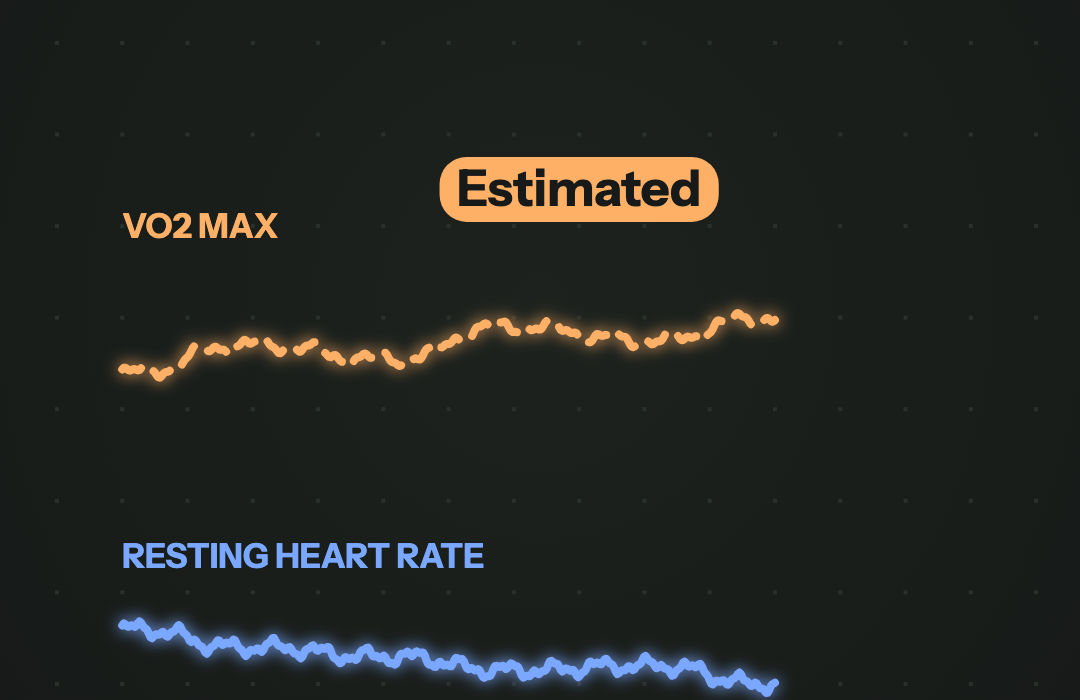
Your watch mixes two kinds of numbers. Heart rate comes straight from the optical sensor. VO2 max, which Apple calls Cardio Fitness, is an estimate calculated from heart rate and pace during outdoor walks, runs and hikes.
In Lambe and colleagues (2025, PLOS ONE), 30 adults did a lab test and wore an Apple Watch: the watch underestimated VO2 max by 6.07 ml/kg/min on average, a mean absolute error of 13.3%. An AI that treats that estimate like a lab result, and grades your heart on it, can be confidently wrong.
For any AI: ask what it has first
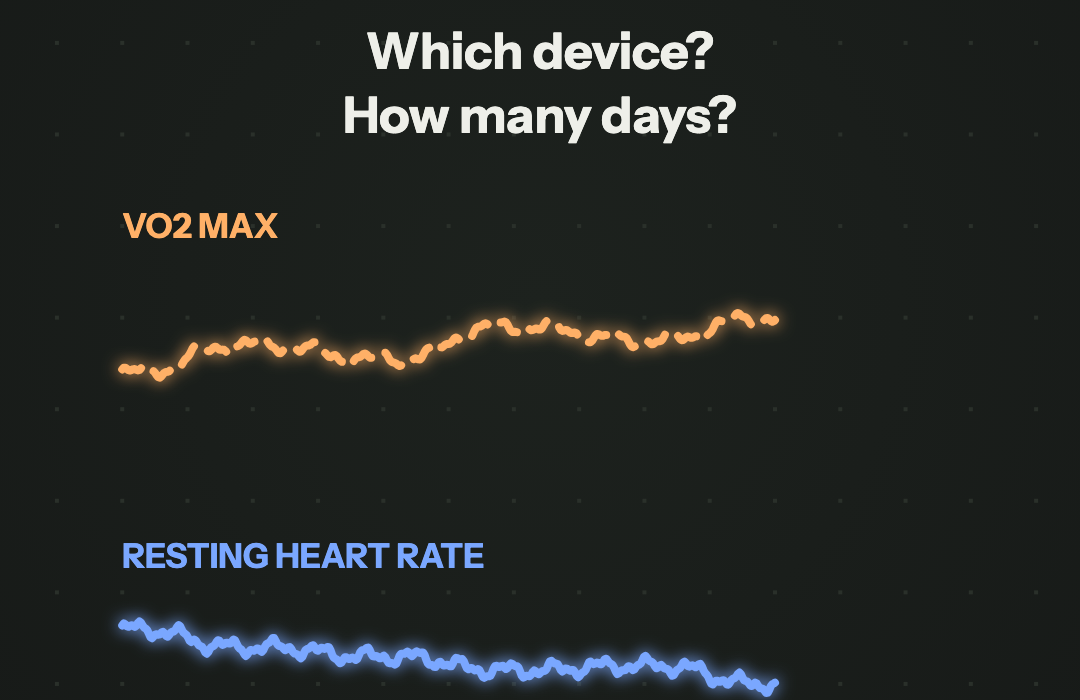
Paste this into Claude or ChatGPT with your watch data, before any other question. It makes the AI show its inputs, so you can see a metric with 2 days of data or a switch of watch before it ends up inside a grade. Asking for 3 questions the data can answer well turns a verdict into a better conversation.
Before you judge anything about my health, list every metric you can see in my data. For each one: how many days of data you have, the first and last date, which device or app recorded it, and whether it's measured directly by a sensor or estimated by an algorithm (for example VO2 max). Flag gaps, a change of device, and anything with too little data to trust. Don't give me a grade or a score. Then tell me which 3 questions this data can actually answer well.On Apple Watch: let telo read it
With telo connected, the AI can call data_status, which returns every metric with its first date, last date and number of days, and whether the iPhone finished importing the full history. telo does not return which device recorded each metric, so the AI tells measured from estimated by the metric itself, not by the source.
Using telo, run data_status and list my metrics with days of data and first and last date. Mark which ones the watch estimates rather than measures, like VO2 max, and flag metrics with few days or long gaps. No grades. Then tell me which 3 questions my data can answer well.What the test showed
On one account, data_status returned 96 metrics and confirmed the full history had been imported. Heart rate had 2,395 days of data since January 2020 and resting heart rate 2,380; VO2 max, the estimate, had 1,288 days since February 2020, so it is far sparser than the measured heart numbers.
It also showed what a grade would quietly skip: body fat with only 2 days of data, height with 2, food logging that stopped in April 2026 and a handwashing metric that stopped in 2025. None of that is visible if you only ask for a score. The first version of the telo prompt also asked for the source of each metric; telo does not return it, so the prompt was changed to leave it out.
Where the data stops
The F to B story is a single journalist's experience, reported by MacRumors from a Washington Post column we could not read in full. The 13% figure comes from 30 adults and one generation of the watch algorithm, which Apple updates with watchOS.
Listing what the AI can see does not make its conclusions right. It only shows you what a conclusion would rest on. A watch is not a medical test, and a grade from an AI is not a diagnosis. If something worries you, talk to a doctor. This is not medical advice.
Practical questions
Can ChatGPT or Claude grade my heart health from my Apple Watch?
They will produce a grade if you ask, but in one reporter's test with 10 years of data the grade swung between F and B on repeat and his doctor disagreed. Ask the AI to list what data it has and which numbers are estimates first, and use the answer as a conversation, not a verdict.
Is Apple Watch VO2 max accurate?
It is an estimate. In a 2025 study of 30 adults against a lab test, the watch underestimated VO2 max by about 6 ml/kg/min on average, a mean absolute error of 13.3%. It is more useful as a trend over months than as a single number.
Which Apple Watch numbers are measured and which are estimated?
Heart rate comes straight from the optical sensor. VO2 max (Cardio Fitness) is calculated by an algorithm from heart rate and pace during outdoor walks, runs and hikes. When in doubt, ask the AI to label each metric before it interprets anything.
Sources and availability
Plans, regions and interfaces can change. Check the official sources before setting up.
- MacRumors, 2026-01-27 · on Geoffrey Fowler's Washington Post column about ChatGPT Health and Apple Watch data
- Lambe et al., 2025 · Apple Watch VO2 max estimation against laboratory testing · PLOS ONE
How this guide was prepared
The Apple Watch prompt was tested on 13 November 2026 against one account, with the owner's permission, using only telo's read tools (data_status and list_metrics). The reporter's story comes from MacRumors' account of Geoffrey Fowler's column; the 13% figure from Lambe et al. 2025. The images are frames from Reel ep22 and the lines in them are illustrative. Prepared with AI assistance.