What 27 studies found
Bosquet and colleagues (2007, Medicine and Science in Sports and Exercise) pooled 27 of 182 studies on tapering. The strongest effect on performance came from a taper of two weeks (effect size 0.59) with training volume reduced progressively by 41 to 60% (effect size 0.72), without changing training intensity or how often people trained.
Results are effect sizes averaged across small studies, not a percent faster. They describe what worked on average, not a plan for everyone.
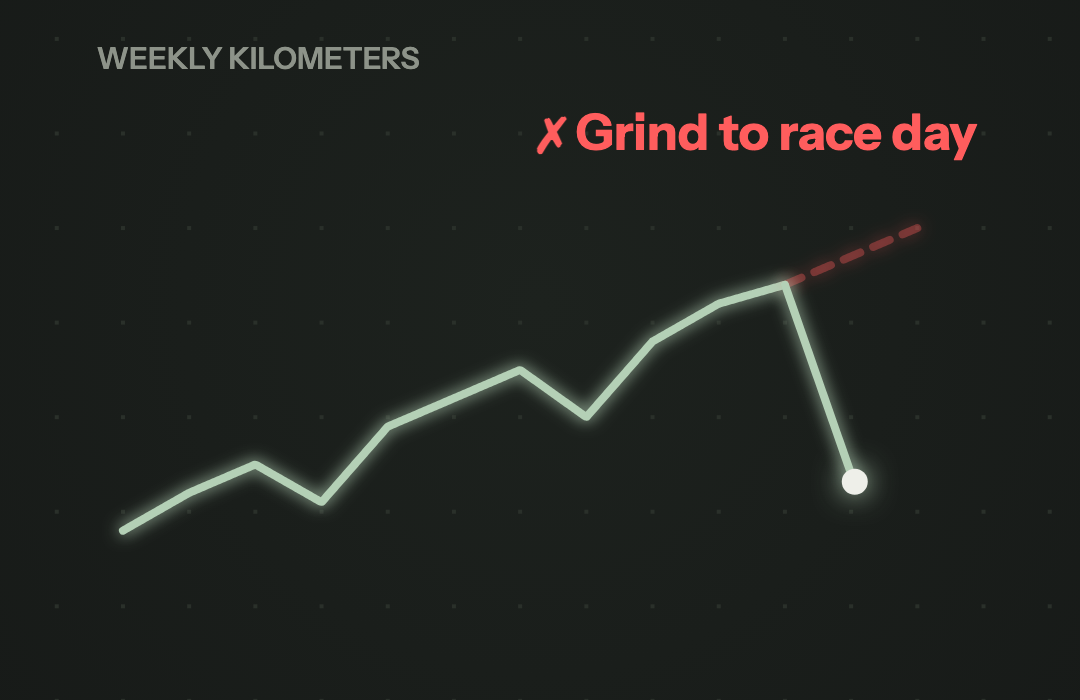
Why: fatigue goes faster than fitness
Two weeks is too short to lose much fitness and long enough to shed the fatigue of the build. That is the usual explanation for why the taper works; the meta-analysis measured performance, not fitness or fatigue.
The common mistake is cutting intensity together with the miles. In the analysis, keeping intensity and frequency was part of the best taper, so the hard sessions stay, only shorter.
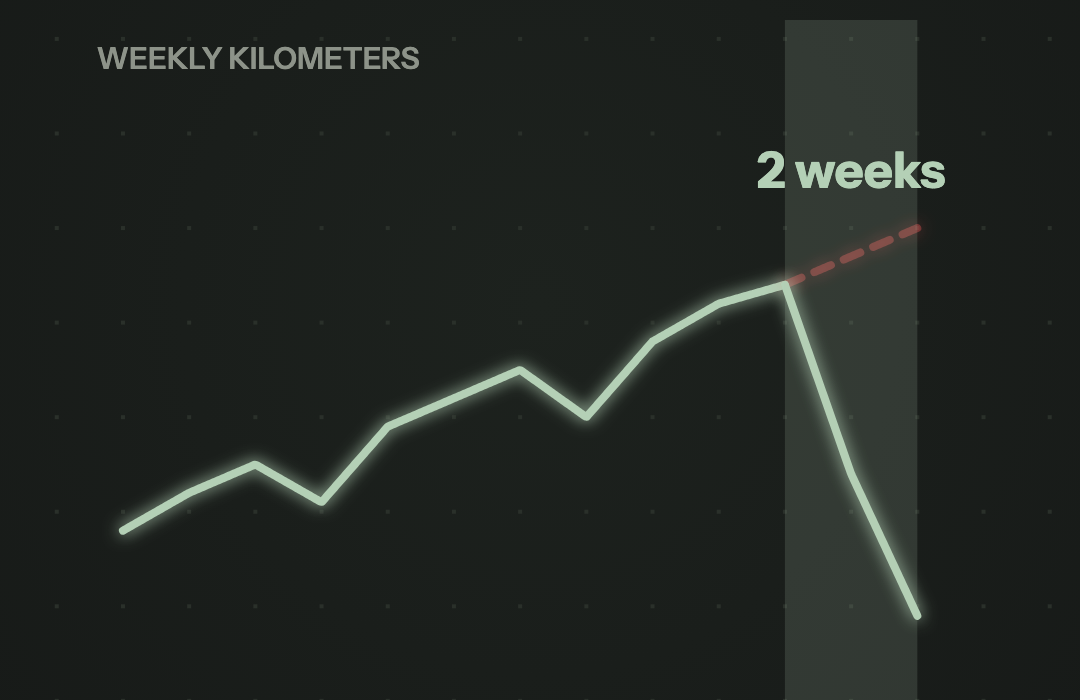
For any watch: build the taper from your weeks
Paste this into Claude or ChatGPT with your watch data, or type in your weekly totals if the assistant cannot read them.
My race is on [date]. Add up my running distance per week for the last 8 weeks and find my peak week. Build a 2-week taper that cuts weekly volume step by step to about half of that peak by race week, keeps my usual number of runs, and keeps one short session at race pace or faster each week. Show it day by day.Plan your taper from your last 8 weeks of runs
With telo connected, your assistant reads every run from Apple Health with distance and time in each heart rate zone, so it can tell the hard sessions from the easy ones, and it can send the plan to your Apple Watch as workouts. Eight weeks of history in the conversation is part of telo Pro; on Free, the assistant sees the last 7 days.
Using telo, sum my weekly running distance for the last 8 weeks, find my peak week and compare it with my average week, then create my 2-week taper as workout plans on my Apple Watch: same number of runs, about half the volume by race week, and the hard sessions kept but shorter.What the test showed
On one account, telo returned 19 runs across the 8 weeks, two or three a week. Weekly distance ranged from 11.1 to 17.4 km in seven of the weeks, and one week reached 25.1 km with three runs and about 20 minutes near maximum heart rate.
That peak week is the trap: half of 25 km is about 12.5 km, close to an ordinary week for this account, so a taper built from it would barely cut anything. Asking the assistant to compare the peak with the average week is what makes that visible; here, building from the last four weeks (about 16 km a week) gives a real cut.
The test used only telo's read tools, so the workouts were planned in the answer but not sent to the watch.
How to read your answer
This is an average across studies, not a coaching plan and not medical advice. If you are injured or ill, the taper is the wrong question.
- Check the peak first. If one week stands far above the rest, ask for the taper from your usual weeks instead.
- Count the runs. The taper keeps how often you run; it shortens each run.
- Find the hard session in each week. It should still be there, at race pace or faster, just shorter.
- Volume should fall step by step over the two weeks, not all at once on the first day.
Practical questions
How long should a taper be before a race?
In the meta-analysis of 27 studies, two weeks gave the strongest average effect on performance, with volume cut step by step and the hard sessions kept.
Should I run slower during the taper?
No. The best taper kept training intensity and how often people trained. What drops is volume: shorter runs, with the hard sessions kept but shorter.
How much should I cut my mileage?
The best results came with weekly volume reduced progressively by 41 to 60%. Count from your usual training weeks, not from a single unusually big week.
Sources
How this guide was prepared
The Apple Watch prompt was tested on 16 November 2026 against one account, with the owner's permission, using only telo's read tools: running workouts grouped by week, with distance and heart rate zones, from 21 September to 15 November 2026. Creating workout plans on the watch was not run in the test. The study numbers come from Bosquet et al. 2007, checked in the abstract on 15 November 2026; the images are frames from Reel ep29 and the lines in them are illustrative. Prepared with AI assistance.