What the study found
Buffey and colleagues (2022, Sports Medicine) pooled 7 crossover trials, 166 people in total, most of them sedentary adults with overweight or obesity. In each trial the same people spent a day sitting for 5 to 8 hours around meals or drinks, and on other days broke that sitting with short breaks: 2 minutes every 20 minutes or 5 minutes every 30 minutes, either standing or walking at an easy 1.5 to 4.4 km/h.
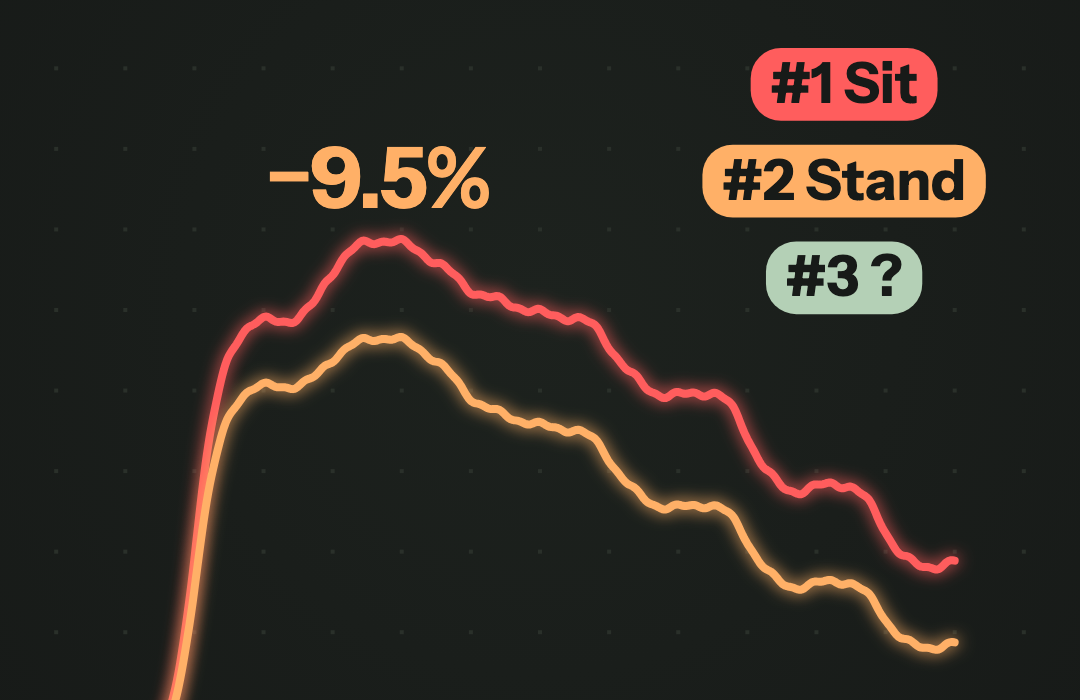
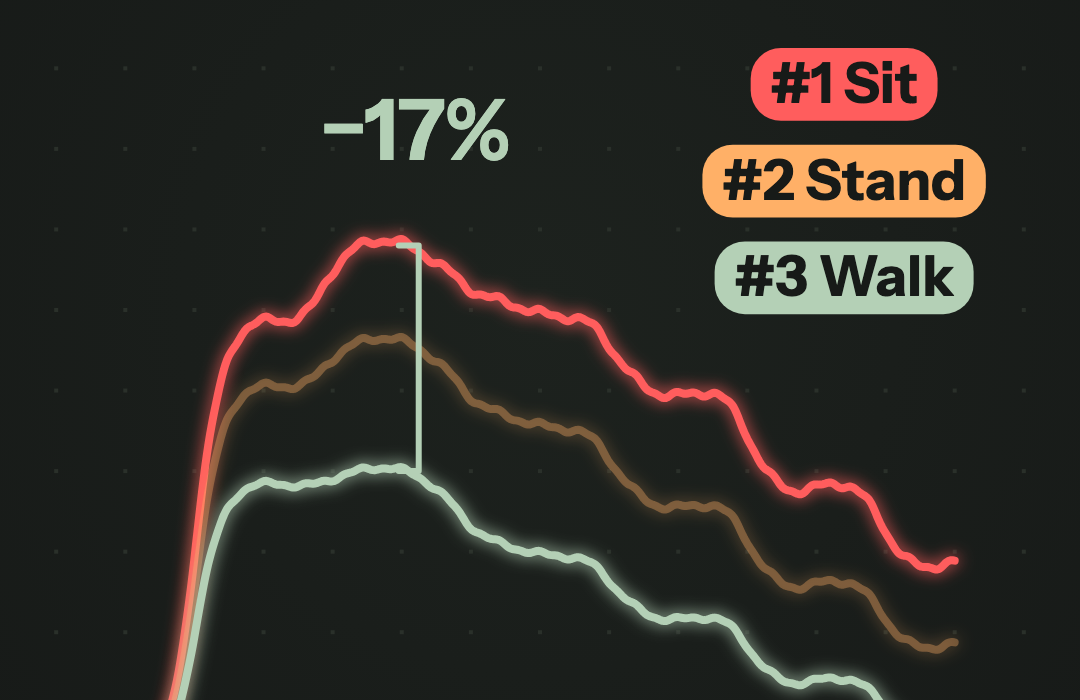
Against sitting, post-meal blood sugar was about 9.5% lower with standing breaks and about 17% lower with walking breaks (descriptive averages across the studies). In the pooled analysis, walking lowered both glucose and insulin; standing lowered glucose a little and had no significant effect on insulin.
How to do it
The protocol is not one walk right after eating. It is short, repeated breaks during the hours after a meal, so the easiest version fits around a desk day.
- Pick the meal after which you sit the longest, usually lunch at work or dinner on the couch.
- Set a timer for every 20 to 30 minutes for the next 2 hours.
- When it rings, walk slowly for 2 to 5 minutes: a hallway, the stairs, around the block.
- If you cannot walk, stand up. It helps less, but it still beats sitting.
For any watch: build an after-meal plan
Paste this into Claude or ChatGPT with your watch data. Asking for your least active days is the point: those are the days where the breaks add the most, and where a plan has to be easiest to keep.
Look at my daily steps and exercise minutes for the last 4 weeks. Tell me which days I moved the least, and build a simple after-meal plan for my week: a 2 to 5 minute easy walk every 20 to 30 minutes in the 2 hours after lunch and dinner, fitted to how active I already am. Keep it realistic for a workday.Fit walks into your week
With telo Pro, your assistant can compare four weeks of daily steps and exercise minutes. Pick a quieter day, tell it when you usually eat lunch and ask where a walk might fit.
Using telo, look at my steps and exercise minutes for the last 4 weeks, find my least active days, and plan short easy walks after lunch and dinner for this week.What the test showed
On one account, telo returned all 28 days with steps and exercise minutes, no gaps. The usual day sat around 13,000 steps and a little over 2 hours of exercise minutes, and the three quietest days stood out clearly: one with 40 exercise minutes and about 7,800 steps, one with about 6,200 steps, and one with about 7,300.
That is enough to build the plan: lighter days get the full set of breaks after both meals, active days get the lunch ones. What the AI cannot see is what you did in the hours after lunch, because telo stores daily totals, not steps by the hour. So the answer is a plan fitted to how active you are, not a reading of your after-meal habits.
Where the data stops
The trials were small (10 to 60 people each), lasted one day each and ran in a lab, mostly with sedentary adults with overweight or obesity; two included people with impaired glucose and none included people with type 2 diabetes. They measured blood sugar and insulin over hours, not diabetes risk over years. The 9.5% and 17% are averages across studies with wide spread, and the authors note possible publication bias in the walking results.
The study did not test one walk right after eating; the breaks were repeated through the hours around the meal. Your watch counts steps per day here, so it cannot confirm when you walked. This is not a diabetes treatment and not medical advice. If you have diabetes or take glucose lowering medication, talk to your doctor.
Practical questions
How long should I walk after eating?
In the trials, 2 to 5 minutes of easy walking every 20 to 30 minutes during the hours after a meal. Short and repeated was the protocol, not one long walk.
Is standing up after a meal enough?
It helps less. Standing breaks lowered post-meal blood sugar by about 9.5% on average against sitting, walking breaks by about 17%, and only walking lowered insulin significantly.
Does this prevent diabetes?
The study cannot say. It measured blood sugar and insulin over a single day in small lab trials, not diabetes risk over time. It is a reasonable habit, not a treatment.
Sources
How this guide was prepared
The Apple Watch prompt was tested on 14 November 2026 against one account, with the owner's permission, using only telo's read tools: daily steps and exercise minutes for the last 4 weeks. The study numbers come from Buffey et al. 2022, checked in the full text; the images are frames from Reel ep26 and the curves in them are illustrative. Prepared with AI assistance.