What the studies found
Researchers pooled studies that measured hip or knee osteoarthritis in runners and in people who do not run. Seventeen of the 25 studies, with 114,829 people, went into the combined numbers.
Runners counted as competitive if they were professional or elite athletes or raced internationally. Everyone else who ran was recreational. Running for less than 15 years was linked to a lower rate than not running at all.
| Group | With arthritis |
|---|---|
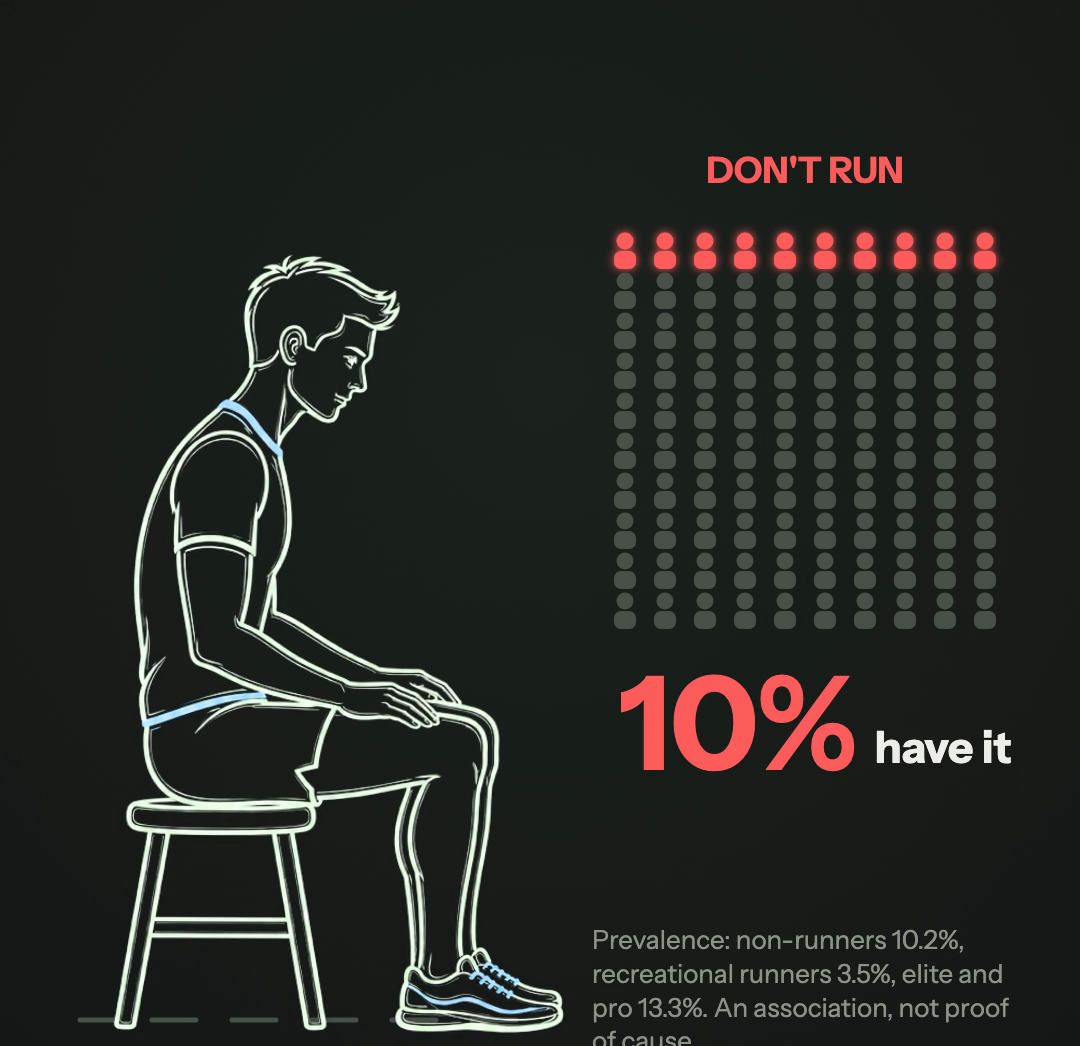
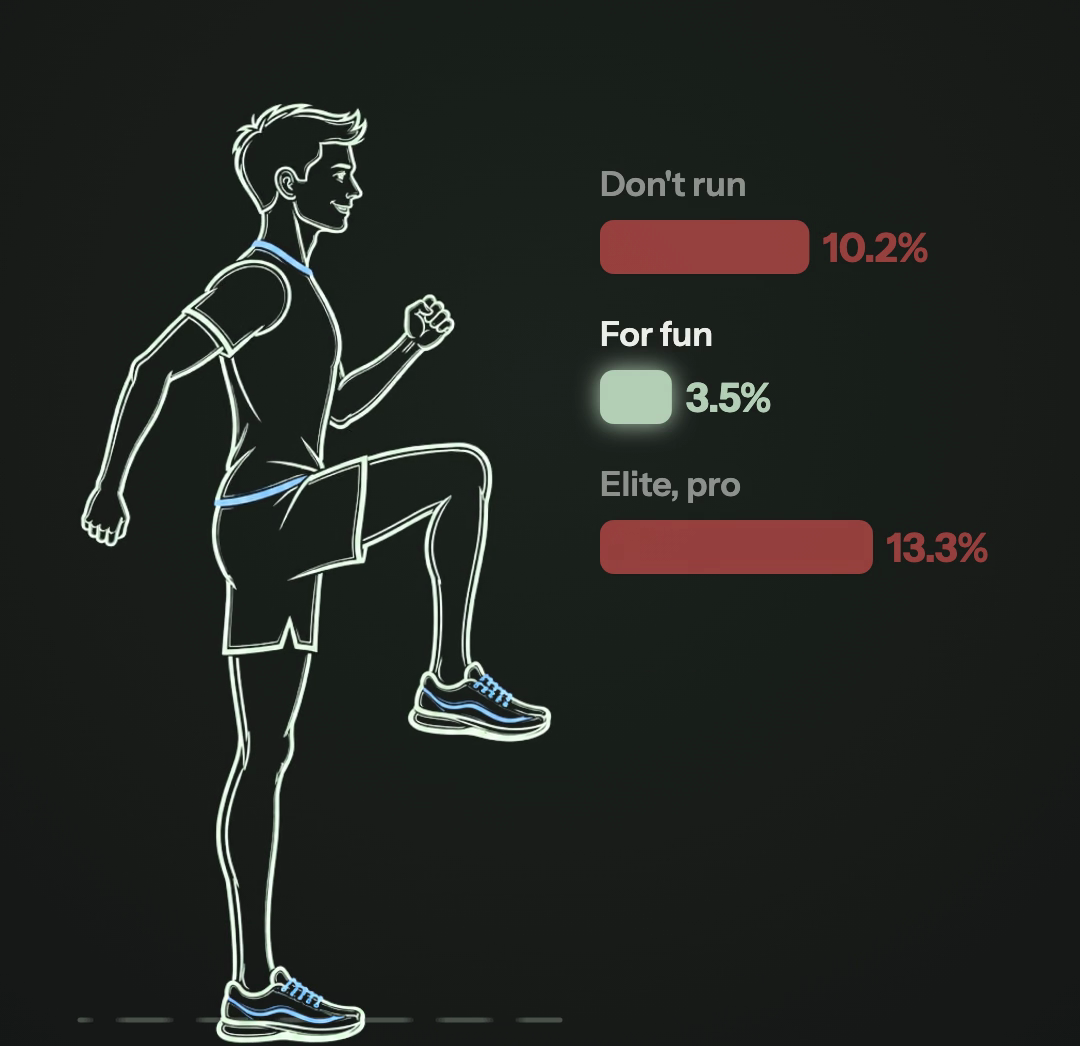
| Recreational runners | 3.5% |
| People who don't run | 10.2% |
| Elite and professional runners | 13.3% |
Why the dose matters
The authors read the results as two risks at the two ends: a sedentary life on one side, and many years of high-volume, high-intensity running on the other. Running a few times a week sits in the middle, where the rate was lowest.
These are associations. The studies could not rule out other causes, such as earlier knee injuries, which are more common in some sports and raise arthritis risk on their own.
What to do
The second and third steps are common training advice, not findings of this meta-analysis. This is not medical advice.
- Keep running a few times a week. That is the group with the least arthritis.
- Build distance gradually instead of jumping in one week.
- If a knee hurts for more than a few days, or swells, get it checked before you keep training on it.
For any watch: read your running year
Paste this into Claude or ChatGPT with your weekly distances from your running app.
Here is my running for the past 12 months, week by week: [paste weekly distances]. Tell me how many weeks I ran, my usual week, and the weeks where distance jumped the most compared with the weeks before. Then suggest how to keep my running steady over the next 8 weeks.With Apple Watch: your weekly running load across the year
With telo connected, your assistant reads the runs your Apple Watch saved to Apple Health, grouped by week, with distance, duration and time in each heart rate zone.
On Free, the assistant sees your last 7 days; Pro opens your whole history, which a 12-month view needs.
Using telo: pull my running workouts week by week for the past 12 months. Show my weekly distance, how many weeks I ran, my usual week (the median), and the three weeks where distance jumped the most compared with the four weeks before. Then tell me whether my running looks steady or spiky, and how to keep it steady.What the test showed
On one account, telo returned 12 months of running grouped by week, from November 2025 to November 2026, with distance, duration and heart rate zones for each week and no rows cut. Weeks without a run are simply absent, which the assistant can count as gaps.
Practical questions
Does running cause knee arthritis?
Not for recreational runners, on the evidence so far. A 2017 meta-analysis of 25 studies found knee or hip arthritis in 3.5% of recreational runners against 10.2% of people who don't run. The rate was higher, 13.3%, in elite and professional runners.
How much running is safe for your knees?
The studies did not set a number. Running for fun, at an amateur level, was linked to the lowest rate of arthritis, and running for less than 15 years to a lower rate than not running. Years of high-volume, high-intensity running at an elite level were linked to more.
Is it bad to run with knee pain?
Pain that lasts more than a few days, or swelling, should be checked before you keep training. A past knee injury is a known risk factor for arthritis on its own.
Can ChatGPT or Claude track my running load from my Apple Watch?
Yes, with telo. It reads your runs from Apple Health grouped by week and can show your usual week, how many weeks you ran and the weeks where distance jumped the most.
Sources
How this guide was prepared
The numbers come from the 2017 meta-analysis by Alentorn-Geli and colleagues, abstract read on 22 November 2026. The Apple Watch prompt was tested on 22 November 2026 against one account, with the owner's permission, using only telo's read tools: running workouts grouped by week for 12 months. The images are frames from Reel ep41; the example card in the Reel is illustrative. Prepared with AI assistance.