What 223 studies found
Laborde and colleagues (2022, Neuroscience and Biobehavioral Reviews) screened 1,842 abstracts and included 223 studies of voluntary slow breathing. Vagally mediated HRV went up in all three windows they looked at: during the breathing, immediately after a single session, and after interventions of several sessions.
These are group averages across varied protocols. The abstract gives no single best breathing rate and no effect size, so this guide does not either. It is not a treatment for anything.
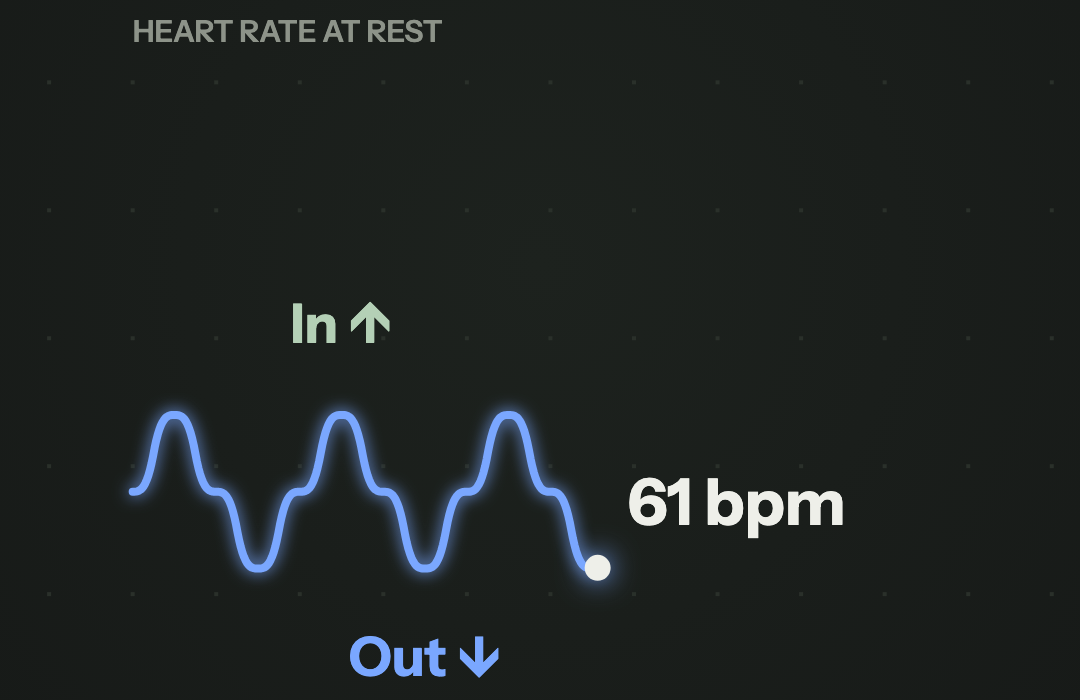
Why a session's HRV is not your overnight HRV
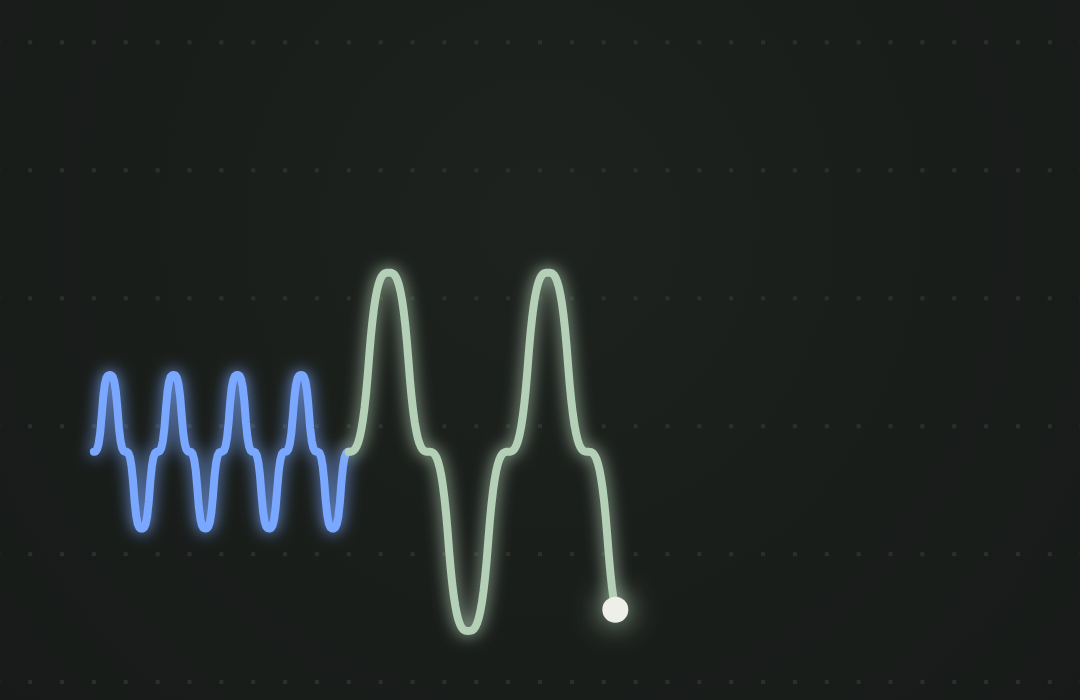
Slow breathing makes the wobble bigger while you do it, which is exactly why an HRV reading taken during a breathing session cannot be compared with the one your watch takes in the background or overnight. Compare like with like: daily values against daily values, over weeks.
The studies measured vagal HRV with lab methods. Apple Watch stores HRV as SDNN from short background readings, so a daily average is a rougher signal, and a few days of difference can be noise.
For any watch: compare your mindful days
Paste this into Claude or ChatGPT with your watch data. Mindful minutes come from the Mindfulness app on Apple Watch or any app that writes mindful sessions to Apple Health.
For the last 8 weeks, split my days into days with mindful minutes logged and days without. Show my average daily HRV and resting heart rate for each group, how many days are in each, and whether the difference is bigger than my usual day-to-day range. If fewer than 5 days have mindful minutes, say so and don't compare: give me my usual HRV range instead, as the baseline to check after a week of 5-minute sessions. It's an association, not proof.Check if your mindful days move your HRV
With telo connected, your assistant reads mindful minutes, daily HRV and resting heart rate straight from Apple Health, day by day. Eight weeks of history in the conversation is part of telo Pro; on Free, the assistant sees the last 7 days, which is enough to set this week's baseline.
To look at the same numbers yourself, the Health tab of telo on the web opens your HRV in any browser, with your usual range and a second metric to compare against.
Using telo, compare my daily HRV on days with mindful minutes against days without, over the last 8 weeks, with the day count for each group and my usual HRV range. If fewer than 5 days have mindful minutes, don't compare: show my usual HRV range as the baseline to check after a week of 5-minute slow-breathing sessions.What the test showed
On one account, telo returned no days with mindful minutes in the 8 weeks from 21 September to 15 November 2026; the account had 27 such days in its whole history, the last one in March 2026. So the comparison had nothing to compare, and the prompt's fallback is what made the answer useful.
The baseline came out as daily HRV between 51 and 75 ms, with weekly averages from 58 to 64 ms, and resting heart rate between 46 and 53 bpm. That is the range a week of evening sessions has to clear before the difference means anything.
How to read your answer
This is an association in your own data, not proof that breathing changed your HRV, and not medical advice.
- Look at the day counts first. Fewer than 5 mindful days is not a comparison, it is a starting point.
- Compare the gap with your usual range. A difference smaller than your normal day-to-day swing is noise.
- Check what else changed. Mindful days can also be calmer, earlier or alcohol-free days, and those move HRV too.
- Never compare a reading taken during a session with your daily or overnight HRV.
Practical questions
Does slow breathing increase HRV?
In a meta-analysis of 223 studies, vagally mediated HRV went up during slow breathing, right after a single session and after several weeks of practice. These are averages across varied protocols.
Why is my HRV higher during a Breathe session than overnight?
Slow breathing makes the rise and fall of your heart rate bigger while you do it, so a reading during the session is not comparable with your background or overnight HRV. Compare daily values over weeks.
How long until I see a change in my daily HRV?
The studies found effects after interventions of several sessions, but your watch's daily HRV swings from day to day. Give it at least a week of sessions and compare against your usual range, not against one day.
Sources
How this guide was prepared
The Apple Watch prompt was tested on 16 November 2026 against one account, with the owner's permission, using only telo's read tools: daily mindful minutes, HRV and resting heart rate from 21 September to 15 November 2026, plus the account's full mindful minutes history. The study numbers come from Laborde et al. 2022, checked in the abstract on 16 November 2026; the images are frames from Reel ep30 and the lines in them are illustrative. Prepared with AI assistance.